Heralded upon its release in 2002, Grand Theft Auto: Vice City is a game that has a dubious honor I will call "the middle child syndrome."
Despite voice acting from Hollywood megastars like Ray Liotta (protagonist Tommy Vercetti), Burt Reynolds (real estate mogul Avery Carrington), NFL tough guy Lawrence Taylor (car salesman and former football pro BJ Smith), Dennis Hopper (porn movie auteur Steve Scott), Debbie Harry (taxi controller) and more, in the years since its release Vice City has been overshadowed by its predecessor GTA3, which rocketed the franchise into 3-D, and its follower San Andreas, heralded at the time for its massive, realistic world.
The high-definition era of Rockstar's signature franchise has revisited Liberty City and San Andreas, but never returned to the sandy, satiric shores of the GTA universe's Miami doppleganger. Some would argue that's because the pastels and excess that made sense in a game set in the 1980s wouldn't work with the new approach Rockstar has taken with the franchise. But many of those themes were present in Grand Theft Auto 5, set in southern California, and Michael De Santa was the closest thematically to Liotta's Vercetti that we've seen inhabiting the shoes of a GTA protagonist since 2002 (white man w/ ties to organized crime).
After achieving 100 percent completion in GTA3 recently, I fired up Vice City, a game I spent a lot of time with in the early 2000s both on my Playstation 2 and PC. The game's look and feel were immediate hooks, but many of the game's missions weren't as memorable as GTA3's were when I was replaying that game. At first, I thought this might be another reason Vice City gets lost in the shuffle of Rockstar's GTA history. But the truth is, it's because Vice City offers greater freedom, while at the same time funneling the player toward a satisfying conclusion to the main storyline, something that subsequent GTA games haven't been able to recapture.
An early mission in Vice City has you attending a yacht party thrown by Colonel Juan Cortez (voiced by 'Goonies' alumnus Robert Davi). At this party, you meet every character of consequence you'll see/work for later in the game: Carrington, Ricardo Diaz (Luis Guzman), Scott, Smith, members of the fictional rock group "Love Fist." Rockstar sets the table for the story of revenge and conquest you're about to embark on.
Then, the first portion of the game has you learning Vice City's new mechanics, like changing outfits, driving motorbikes and piloting helicopters. While these tutorials aren't perfect by any stretch of the imagination (can you say 'Demolition Man'?), the early missions serve as a stepping stone to the freedom that opens up once you waste Diaz.
From there, the decision falls to the player how to proceed. Which assets do you want to acquire? Do you go after the flashy Malibu club and pull off the series first true "heist" sequence (a mission structure revisited in just about every GTA game since)? Do you work for Scott, and find out some secrets about conservative congressman Alex Shrub? Do you spend the most money, but also attain the greatest reward, completing the missions for the Print Works, essential to unlocking the final showdown with mobster Sonny Forelli (Tom Sizemore)? Maybe street racing is your deal. Smith's Sunshine Autos is for you.
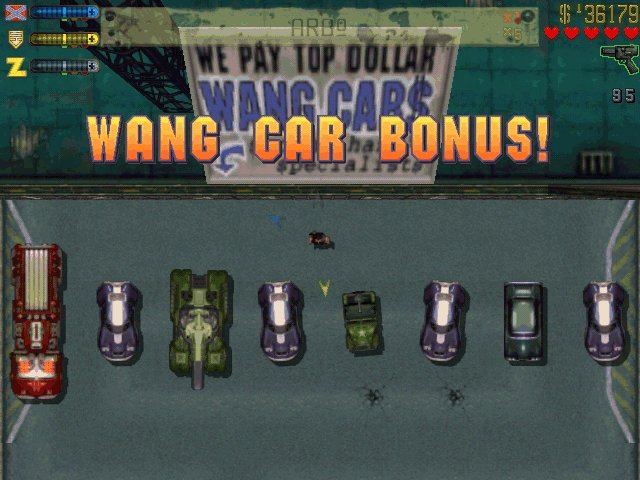
In a game series that emphasizes player choice, the way your reach the end game in Vice City is perhaps the most revolutionary that was seen in the franchise until the introduction of heists into GTAV. You choose what story elements you want to unlock first, rather than being guided through a series of missions that will ultimately result in the final confrontation. Not even San Andreas, voted the best GTA game in a fan poll just before the release of GTAV, had that kind of freedom. It's also a callback to the early 2D roots of the GTA series, which required only that you attain a "high score" (cash in the GTA universe) to progress through the game.
Vice City is an imperfect game, to be sure. It's targeting system is still awful, compared to later GTA titles, and the motorbikes just don't handle as well as they could. Many of the game's missions fall prey to the constricted structure of early 3D GTA titles: go here, kill some guys, pick this up, return.
But in terms of player choice, GTA: Vice City is perhaps one of the earliest and most successful experiments in the franchise. And it's still a blast to have that freedom at your fingertips, 14 years later.
Showing posts with label music. Show all posts
Showing posts with label music. Show all posts
Wednesday, May 11, 2016

Sunday, July 20, 2014
An Inexplicably Close Look at an Obscure Song: "Rock the House" by Gorillaz feat. Del Tha Funky Homosapien
This one hurts.
"Gorillaz" was one of my favorite albums growing up. I still remember picking my jaw off the floor the first time I saw "Clint Eastwood" on MTV. Here was something that had never been tried before, at least on this scale - a completely animated band of misfit musicians, with their own backstories, headed by the brilliant Damon Albarn and for some reason some "Thriller" inspired monkeys. Dude, how are you NOT going to buy that album immediately?
And one of the coolest parts of the debut video was Del tha Funky Homosapien, who has some of the sickest rhymes out there, playing a zombified Russel, the beat man. If you don't still get a chill when Del raps, "time for me is nothin' 'cuz I'm countin' no age," then you didn't grow up in the early 2000s.
So what the fuck happened with "Rock the House"?
Take all of the lyrical genius of "Clint Eastwood" and throw it out the window. Sure, that horn line is catchy. I mean, every program on music television (MTV, VH1, what have you) used it as intro/outro music. It is a fantastic beat, there's no question. But is it really "Rock the House" material?
"Gorillaz" was one of my favorite albums growing up. I still remember picking my jaw off the floor the first time I saw "Clint Eastwood" on MTV. Here was something that had never been tried before, at least on this scale - a completely animated band of misfit musicians, with their own backstories, headed by the brilliant Damon Albarn and for some reason some "Thriller" inspired monkeys. Dude, how are you NOT going to buy that album immediately?
And one of the coolest parts of the debut video was Del tha Funky Homosapien, who has some of the sickest rhymes out there, playing a zombified Russel, the beat man. If you don't still get a chill when Del raps, "time for me is nothin' 'cuz I'm countin' no age," then you didn't grow up in the early 2000s.
So what the fuck happened with "Rock the House"?
Take all of the lyrical genius of "Clint Eastwood" and throw it out the window. Sure, that horn line is catchy. I mean, every program on music television (MTV, VH1, what have you) used it as intro/outro music. It is a fantastic beat, there's no question. But is it really "Rock the House" material?
"I got the balls to rock the salsa" Yeah. You actually heard that.
We're in 2014, and I've still yet to find someone who can tell me why one needs to shake their asscrack when simply shaking their ass will do. And, I mean, look at that video! Del is essentially the bad guy in the opening scene of Raiders of the Lost Ark. Come on, guys. Surely we can do better than this.
Del's involvement with the band ended with that self-title debut in 2001, and I can't help but think lines like "Get funky we've been funkadelic wearin' Pampers/While you eggheads is on the wall preparin' answers," had something to do with that. Del, we loved you in Tony Hawk 3, why must you give us this?
Of course, I could be looking at this too closely.
Sunday, April 6, 2014
An Inexplicably Close Look at an Obscure Song: The Ataris "Boys of Summer"
When I was a kid, like many I dreamed of rock and roll weekends. I even held a bass at one point and attempted to learn the instrument, despite having the rhythm of some combination of Anthony Michael Hall characters from the 1980s.
There were two names I wanted for my band, to be emblazoned across the drum set as I made young women swoon with my delicious licks. The first was The Ecto-Coolers. The second was The Ataris.
As far as I know, the Hi-C inspired moniker is still up for grabs. I was devastated when I learned sometime around the 10th grade my back-up dreams were dashed.
If you're going to name yourselves after the early 80s video game console of choice, you better be damn good. The Ataris seemed it when I started listening to their music right around junior high. "Angry Nerd Rock" is still one of my angsty favorites from those days, when American Hi-Fi and Mest were on repeat in my portable CD player and Dude Where's My Car? was in my VCR.
Ahem. Back off the nostalgia train.
"Boys of Summer" never really made much sense to me. I mean, yeah, I understood it when it was played at baseball stadiums and whatnot, but the whole concept seemed dated, even in the 1980s. Was Don Henley singing about gypsies? Who were these boys, and more importantly, where did their female counterparts come from? Are there hordes of young attractive people who burrow themselves underground in winter and show up for sex, drugs and rock and roll in the summer? Is that what those Disney internships are all about?
The Ataris cover of the 1984 hit answers none of these questions, and it also avoids what a good cover song should do - that is, take a song and change its style, message or some other facet to make it your own. For example, the millions of ska/punk covers of 80s songs. Or Authority Zero's (contemporary with The Ataris) cover of "Mexican Radio."
What we get with The Ataris is a straightforward, power pop version of a song that was already a straightforward, power pop piece that is the musical equivalent of a corn dog - battered with sweetness, but unfilling and leaving you with regret.
The Ataris would have been better off covering the Juno First theme song. But maybe I'm just looking into it too closely.
There were two names I wanted for my band, to be emblazoned across the drum set as I made young women swoon with my delicious licks. The first was The Ecto-Coolers. The second was The Ataris.
As far as I know, the Hi-C inspired moniker is still up for grabs. I was devastated when I learned sometime around the 10th grade my back-up dreams were dashed.
If you're going to name yourselves after the early 80s video game console of choice, you better be damn good. The Ataris seemed it when I started listening to their music right around junior high. "Angry Nerd Rock" is still one of my angsty favorites from those days, when American Hi-Fi and Mest were on repeat in my portable CD player and Dude Where's My Car? was in my VCR.
Ahem. Back off the nostalgia train.
"Boys of Summer" never really made much sense to me. I mean, yeah, I understood it when it was played at baseball stadiums and whatnot, but the whole concept seemed dated, even in the 1980s. Was Don Henley singing about gypsies? Who were these boys, and more importantly, where did their female counterparts come from? Are there hordes of young attractive people who burrow themselves underground in winter and show up for sex, drugs and rock and roll in the summer? Is that what those Disney internships are all about?
The Ataris cover of the 1984 hit answers none of these questions, and it also avoids what a good cover song should do - that is, take a song and change its style, message or some other facet to make it your own. For example, the millions of ska/punk covers of 80s songs. Or Authority Zero's (contemporary with The Ataris) cover of "Mexican Radio."
What we get with The Ataris is a straightforward, power pop version of a song that was already a straightforward, power pop piece that is the musical equivalent of a corn dog - battered with sweetness, but unfilling and leaving you with regret.
The Ataris would have been better off covering the Juno First theme song. But maybe I'm just looking into it too closely.
Sunday, January 12, 2014
An Inexplicably Close Look at an Incredibly Obscure Song: "10 Days Late" Third Eye Blind
Third Eye Blind burst onto the scene in the late '90s displaying an uncanny ability - like Matchbox Twenty, Semisonic, the Goo Goo Dolls and their ilk - to pen hits that blended complicated, sometimes soul-crushing things with sugary delicious pop rock licks. Whether it be the depths of crystal methamphetamine, suicide, or an incredibly painful break-up, Stephen Jenkins and the boys seemed to be able to tackle it with a riff that made the crowds feel like dancing anyway.
Perhaps the one strength that set the 'Frisco rockers apart from their mainstream contemporaries was their very real, very raw way of talking about sex - its passion, its complications, its fundamentals. This is a band that wrote about wasting days in bed, Cunnilingus that would make Colonel Angus blush and orgasms that last ages of summer afternoons.
Which makes "10 Days Late," the third single off the band's 1999 album "Blue," a bit of an anomaly.
In a way, the song is vintage 3EB. It's got a bass line followed by a riff that will tingle your spine. The chorus does not shy away from the, ahem, practical side of sexuality, making the ditty perhaps the highest-profile song about a missed period in pop music history. Jenkins croons and delivers punchy soundbites throughout.
But much like Ben Folds Five's "Brick," released a year prior to "10 Days," the song is almost hopelessly wrapped up in how the man's life is affected by the early pregnancy of a woman. Our dramatic voice in "10 Days" shows his juvenile perspective by saying, "I'm in trouble now, and it cannot wait." Never mind the fact that this young girl he's impregnated is faced with a decision that has moral, legal and life-altering ramifications.
Also, for some reason, there's a need for a choir and a cowbell in this one.
In an effort to continue its track record of writing about complicated themes, 3EB may have bit off more than they could chew with "10 Days Late." It's little wonder why the band's popularity faded considerably after the release of the single (OK, hardcore fans, I know the inner turmoil with Kevin Cadogan probably didn't help much).
Where "Brick" succeeded by emphasizing the limited perspective of its dramatic voice and adopting a sufficiently somber tone, elevating Ben Folds to a level of popularity that lingers today and causes Folds himself to question the message his song about abortion is leaving with folks, "10 Days Late" comes off as something Jenkins insisted it wasn't - just a modern pop/rock song about menstruation. It had the potential to be so much more.
Or maybe I'm just looking at it too closely.
Perhaps the one strength that set the 'Frisco rockers apart from their mainstream contemporaries was their very real, very raw way of talking about sex - its passion, its complications, its fundamentals. This is a band that wrote about wasting days in bed, Cunnilingus that would make Colonel Angus blush and orgasms that last ages of summer afternoons.
Which makes "10 Days Late," the third single off the band's 1999 album "Blue," a bit of an anomaly.
In a way, the song is vintage 3EB. It's got a bass line followed by a riff that will tingle your spine. The chorus does not shy away from the, ahem, practical side of sexuality, making the ditty perhaps the highest-profile song about a missed period in pop music history. Jenkins croons and delivers punchy soundbites throughout.
But much like Ben Folds Five's "Brick," released a year prior to "10 Days," the song is almost hopelessly wrapped up in how the man's life is affected by the early pregnancy of a woman. Our dramatic voice in "10 Days" shows his juvenile perspective by saying, "I'm in trouble now, and it cannot wait." Never mind the fact that this young girl he's impregnated is faced with a decision that has moral, legal and life-altering ramifications.
Also, for some reason, there's a need for a choir and a cowbell in this one.
In an effort to continue its track record of writing about complicated themes, 3EB may have bit off more than they could chew with "10 Days Late." It's little wonder why the band's popularity faded considerably after the release of the single (OK, hardcore fans, I know the inner turmoil with Kevin Cadogan probably didn't help much).
Where "Brick" succeeded by emphasizing the limited perspective of its dramatic voice and adopting a sufficiently somber tone, elevating Ben Folds to a level of popularity that lingers today and causes Folds himself to question the message his song about abortion is leaving with folks, "10 Days Late" comes off as something Jenkins insisted it wasn't - just a modern pop/rock song about menstruation. It had the potential to be so much more.
Or maybe I'm just looking at it too closely.
Sunday, October 20, 2013
An Inexplicably Close Look at an Obscure Song: Jimmie's Chicken Shack "Trash"
I remember my early encounters with pop-ska-rockers "Jimmie's Chicken Shack" with a fondness that came from two sources.
The first being my excitement that I had another group of counter-culture dudes to look up to with which I could ignore the drivel that dominated Total Request Live. The second, much-earlier bout of happiness came the first time I heard the group announced on the radio and hopes sprung that we had a new restaurant in town that could compete with the dry-heave-inducing Popeye's (Louisiana Fast...all the way to the john).
Those first hopes were sustained through the band's first effort I was aware of, 1999's "Do Right" off the group's second-major release, "Bring Your Own Stereo." It was the perfect blend of angst-y, drunken fantasy mixed with power chords that mixed well with the Blink-182's and Sum 41's of the era.
Then came "Trash," the second single off the album.
It's not that the sophomore effort is worse than "Do Right" in any way, it's simply that, at its core, "Trash" is the exact same song. For a band with "chicken" in its name, Jimmie's Chicken Shack's music is surprisingly more like pancakes - as the great Mitch Hedberg once told us, great at first, but by the end, you're fuckin' sick of 'em.
In "Trash," we're introduced to a dramatic voice that, for all intents and purposes, is likely the same manic-depressive mess of a lead singer who's regaling us in "Do Right." Indeed, lead singer Jimi Haha (I wish I was making that up) has said the entire album is about his ex-girlfriend from New Jersey. In other words, this pony's doing the same trick over and over.
While "Trash" attempts to do a few things its predecessor did not, including a foray into the trilingual ("Auf Wiedersehen, yeah my mon ami"), the basic premise is the same: I'm more than you're making me out to be. And, predictably, the final few lines of the song unravel into a nonsensical rant about "jumping right in," presumably to attacking the "mom" in the song that keeps calling our sweet Jimi trash.
By the end, we've learned that the judgmental matriarch enjoys purchasing drugs from our sweet Jimi and ignores personal hygiene.

The first being my excitement that I had another group of counter-culture dudes to look up to with which I could ignore the drivel that dominated Total Request Live. The second, much-earlier bout of happiness came the first time I heard the group announced on the radio and hopes sprung that we had a new restaurant in town that could compete with the dry-heave-inducing Popeye's (Louisiana Fast...all the way to the john).
Those first hopes were sustained through the band's first effort I was aware of, 1999's "Do Right" off the group's second-major release, "Bring Your Own Stereo." It was the perfect blend of angst-y, drunken fantasy mixed with power chords that mixed well with the Blink-182's and Sum 41's of the era.
Then came "Trash," the second single off the album.
It's not that the sophomore effort is worse than "Do Right" in any way, it's simply that, at its core, "Trash" is the exact same song. For a band with "chicken" in its name, Jimmie's Chicken Shack's music is surprisingly more like pancakes - as the great Mitch Hedberg once told us, great at first, but by the end, you're fuckin' sick of 'em.
In "Trash," we're introduced to a dramatic voice that, for all intents and purposes, is likely the same manic-depressive mess of a lead singer who's regaling us in "Do Right." Indeed, lead singer Jimi Haha (I wish I was making that up) has said the entire album is about his ex-girlfriend from New Jersey. In other words, this pony's doing the same trick over and over.
While "Trash" attempts to do a few things its predecessor did not, including a foray into the trilingual ("Auf Wiedersehen, yeah my mon ami"), the basic premise is the same: I'm more than you're making me out to be. And, predictably, the final few lines of the song unravel into a nonsensical rant about "jumping right in," presumably to attacking the "mom" in the song that keeps calling our sweet Jimi trash.
By the end, we've learned that the judgmental matriarch enjoys purchasing drugs from our sweet Jimi and ignores personal hygiene.

Not included in the liner notes: Whether it would be a reasonable expectation for a Baby Boomer to label those pictured above as filthy.
The final line of the song gets in the ultimate dig for a musician clawing his way up the modern rock charts: "Tell your mom, I'm on the radio." Yes, Jimi, yes you were. For about 14 minutes and 59 seconds in an era jam-packed with post-grunge talent, some extremely gifted and others not so much.
Jimmie's Chicken Shack may have cornered the market on angst-ridden young men heaving spite at past lovers. One wonders if this band, which had a unique sound and a hook unlike many of their contemporaries, could have clung to a little more fame had they branched out, song-writing-wise.
But perhaps I'm reading into it a little too much.
Sunday, September 1, 2013
Sonic doom: In defense of Fun.
I've gotten a lot of guff over the past few months from friends who fail to see the appeal of Fun. I'll admit, they're kind of the kitschy alternative choice of the moment, and their melodramatic "Tonight (We are Young)," which is STILL burned ineffably into my car stereo speakers hasn't done much for my pro argument. Saturation has a way of destroying a pop song and the artist responsible (see the One Hit Wonder phenomenon).
Why, then, do I find myself consistently defending the New York, Fueled by Ramen rockers? Does it have something to do with the fact that I still (shamefully) dust off "A Mark. A Mission. A Brand. A Scar." some evenings over a bottle of red wine, dabbing at the corners of my eyelids with a handkerchief? (I don't. It's more like once every year...sort of.) Until this morning, on my first true run in about a week in the blazing Spokane summer, listening to the opening chords of "Carry On" that it hit me.
Fun. writes like the dramatic poets of old.
Yes, I seriously consider Nate Ruess' writing prowess up there with John Donne, Ben Jonson and even Goethe. Will bored schoolchildren read Fun.'s liner notes in two hundred years with the same lazy alacrity as they do in today's high school classrooms? Probably not. But they should. Consider the opening lines to the aforementioned "Tonight," often excised or sped through in radio edits:
"Give me a second I,
I need to get my story straight
My friends are in the bathroom getting higher than the Empire State
My lover she’s waiting for me just across the bar
My seat’s been taken by some sunglasses asking 'bout a scar, and
I know I gave it to you months ago
I know you’re trying to forget
But between the drinks and subtle things
The holes in my apologies, you know
I’m trying hard to take it back."
Now, compare with the first few lines of Donne's "The Flea," that lyric poem you had to memorize then immediately forget before fourth-period algebra:
"MARK but this flea, and mark in this,
How little that which thou deniest me is ;
It suck'd me first, and now sucks thee,
And in this flea our two bloods mingled be."
What combines these two pieces of fiction? Story, symbolism, narrative directness. Both Fun. and Donne (see why I did that now?) are speakers addressing an unknown audience. There's a history here that is explored partially in the words, but also invites those reading/listening to cast their own experiences through the language jotted down.
To be sure, Fun. are not the only pop artists engaging in this kind of lyrical storytelling. Indeed, the dramatic poets often set their verse to song, hence the terms "verse" and "chorus" and the invention of what is commonly referred to as an "earworm." But the prevalence of the technique throughout Fun.'s album, Some Nights (see also: the introductions to "Carry On," "One Foot," and the album's introductory track, for crying out loud), demonstrates a commitment you just don't see these days.
Pop artists usually pay lip service to the need for story, allusion and higher thought in their works. I suspect that's due to the ceaselessly shrinking attention spans of pop music's target audience: teens. It's nice to see incredibly successful artists recognize there is still an audience out there that gives a damn.
That's why I like Fun.
Why, then, do I find myself consistently defending the New York, Fueled by Ramen rockers? Does it have something to do with the fact that I still (shamefully) dust off "A Mark. A Mission. A Brand. A Scar." some evenings over a bottle of red wine, dabbing at the corners of my eyelids with a handkerchief? (I don't. It's more like once every year...sort of.) Until this morning, on my first true run in about a week in the blazing Spokane summer, listening to the opening chords of "Carry On" that it hit me.
Fun. writes like the dramatic poets of old.
Yes, I seriously consider Nate Ruess' writing prowess up there with John Donne, Ben Jonson and even Goethe. Will bored schoolchildren read Fun.'s liner notes in two hundred years with the same lazy alacrity as they do in today's high school classrooms? Probably not. But they should. Consider the opening lines to the aforementioned "Tonight," often excised or sped through in radio edits:
"Give me a second I,
I need to get my story straight
My friends are in the bathroom getting higher than the Empire State
My lover she’s waiting for me just across the bar
My seat’s been taken by some sunglasses asking 'bout a scar, and
I know I gave it to you months ago
I know you’re trying to forget
But between the drinks and subtle things
The holes in my apologies, you know
I’m trying hard to take it back."
"MARK but this flea, and mark in this,
How little that which thou deniest me is ;
It suck'd me first, and now sucks thee,
And in this flea our two bloods mingled be."
What combines these two pieces of fiction? Story, symbolism, narrative directness. Both Fun. and Donne (see why I did that now?) are speakers addressing an unknown audience. There's a history here that is explored partially in the words, but also invites those reading/listening to cast their own experiences through the language jotted down.
To be sure, Fun. are not the only pop artists engaging in this kind of lyrical storytelling. Indeed, the dramatic poets often set their verse to song, hence the terms "verse" and "chorus" and the invention of what is commonly referred to as an "earworm." But the prevalence of the technique throughout Fun.'s album, Some Nights (see also: the introductions to "Carry On," "One Foot," and the album's introductory track, for crying out loud), demonstrates a commitment you just don't see these days.
Pop artists usually pay lip service to the need for story, allusion and higher thought in their works. I suspect that's due to the ceaselessly shrinking attention spans of pop music's target audience: teens. It's nice to see incredibly successful artists recognize there is still an audience out there that gives a damn.
That's why I like Fun.
Monday, June 24, 2013
An Inexplicably Close Look at an Obscure Song: "Summer" by Sum41
So I've been doing a bit of warm weather inventory here at the Shallow End, which invariably leads me to that list of oft-repeated tunes — the ditties you just can't escape — iTunes' collection of my "Most Played" tracks. The top 10 is nothing to write home about and encompasses about everything you'd expect. The 57 seconds of brilliance that is "Stu's Song" from "The Hangover." A melange of '90s One Hit Wonders, and the world's most perfect love song and best with the word "Wanna" in the title (eat it, Spice Girls): Hootie's "Only Wanna Be With You."
But #2 is an entry I simply can't get my head around. It's the eighth track off of the unfortunately titled "All Killer No Filler" by Canadian punk band Sum 41, whose only real claim to fame in 2013 is that their lead singer, Deryck (that's not a typo, apparently they enjoy consonants up North) Whibley's fling with Avril Lavigne. I have to give the boys credit, though. A Rockstar (video game company) sticker is has a conspicuous cameo in the video for "Motivation," one of the few angst-ridden tunes of my teens I still return to from time to time without wanting to travel back in time and punch a hole through my own skull.
As we all remember from early 2001, Sum 41 hit it big with "Fat Lip," that song you sang in your bathroom mirror because clever lyrics like "The doctor said my mom should have had an abortion" seemed incredibly edgy at the time. Sum 41 became the third most popular punk band with an unexplained number in their name that summer, and made the rounds of TRL and whatever subsequent noise VH1 was throwing on the air. All Killer No Filler went platinum, the Warped Tour was cool again and swimming pools everywhere emptied for impromptu skate competitions.
Why, then, did an unreleased track find its way onto my Most Played list?
Unlike Fat Lip, "Summer" is a bit of a conundrum lyrically. Gone are the references to trashing house parties and unsupervised El Camino binges, replaced with what reads like verbal overflow in which our narrator admits he's "awkwardly speaking with nothing to say."
One could argue the entire period of "punk pop" from 2000 through its fiery death in 2005 could be described this way. These were the years when Blink 182 was still writing about prank phone calls and some band that looked like Incubus felt compelled to tell us they weren't perfect. Yellowcard was signing about sunny California while trying to recreate Groundhog Day and the second incarnation of the Cure was trying to confuse teenagers with overwrought allusions and fancy adjectives.
What did it all mean? In the end, a whole lot of nothing. And that's what "Summer" is. It's a nice upbeat song that perfectly encapsulates the "whoa!" of everything speeding around you, and just as quickly you realize the time is up and it's been wasted. We find ourselves, as fans of this music, admitting vicariously to our former favorites: "The worlds not learning from you."
Or maybe I'm just looking a little too closely and being a little too harsh. Here's to summer, you fans of that late 90s/early 2000s punk sugar. The rush will end someday, but replay "Summer" and live in it for just a while longer.
But #2 is an entry I simply can't get my head around. It's the eighth track off of the unfortunately titled "All Killer No Filler" by Canadian punk band Sum 41, whose only real claim to fame in 2013 is that their lead singer, Deryck (that's not a typo, apparently they enjoy consonants up North) Whibley's fling with Avril Lavigne. I have to give the boys credit, though. A Rockstar (video game company) sticker is has a conspicuous cameo in the video for "Motivation," one of the few angst-ridden tunes of my teens I still return to from time to time without wanting to travel back in time and punch a hole through my own skull.
As we all remember from early 2001, Sum 41 hit it big with "Fat Lip," that song you sang in your bathroom mirror because clever lyrics like "The doctor said my mom should have had an abortion" seemed incredibly edgy at the time. Sum 41 became the third most popular punk band with an unexplained number in their name that summer, and made the rounds of TRL and whatever subsequent noise VH1 was throwing on the air. All Killer No Filler went platinum, the Warped Tour was cool again and swimming pools everywhere emptied for impromptu skate competitions.
Why, then, did an unreleased track find its way onto my Most Played list?
Unlike Fat Lip, "Summer" is a bit of a conundrum lyrically. Gone are the references to trashing house parties and unsupervised El Camino binges, replaced with what reads like verbal overflow in which our narrator admits he's "awkwardly speaking with nothing to say."
One could argue the entire period of "punk pop" from 2000 through its fiery death in 2005 could be described this way. These were the years when Blink 182 was still writing about prank phone calls and some band that looked like Incubus felt compelled to tell us they weren't perfect. Yellowcard was signing about sunny California while trying to recreate Groundhog Day and the second incarnation of the Cure was trying to confuse teenagers with overwrought allusions and fancy adjectives.
What did it all mean? In the end, a whole lot of nothing. And that's what "Summer" is. It's a nice upbeat song that perfectly encapsulates the "whoa!" of everything speeding around you, and just as quickly you realize the time is up and it's been wasted. We find ourselves, as fans of this music, admitting vicariously to our former favorites: "The worlds not learning from you."
Or maybe I'm just looking a little too closely and being a little too harsh. Here's to summer, you fans of that late 90s/early 2000s punk sugar. The rush will end someday, but replay "Summer" and live in it for just a while longer.
Tuesday, May 7, 2013
The Shallow End Presents: An Inexplicably Close Look at an Obscure Song, Louis XIV "Finding Out True Love is Blind"
Pop music exists solely for the purpose of giving you that sugar rush, fizzy feeling only soda bubbles can provide. Of course, on closer inspection, the songs in this genre tend toward the flat, syrupy nonsense that signals it's time to crack open another 2-liter. Luckily, the Shallow End is here to lap up the dregs.
For all their differences, the two Louis XIV's that will go down in my history book (yeah, I'm writing one — professional baseball ends in 1985) actually have a lot in common. Sure, there's the discrepancy between their periods of relevance. The French monarch was in power for 72 years, while the San Diego-based rockers were a blip on the modern rock dial for roughly 72 hours. The king waged a war against Protestants, while the band focused their efforts on good musical taste (zing!). The king rested his head at the luxurious Palace of Versailles, while I can only suspect the band snoozed on a tour bus amid a group of squealing groupies. I mean, that's what Almost Famous taught me.
But perhaps the greatest congruency between the two is their inherent treatment of women as objects. This has become a central theme of the Inexplicably Close Look in our examinations so far, and in fact thinking about Louis XIV's semi-hit from 2005, "Finding Out True Love is Blind," I saw a clear cultural path from pop songs of days past.
The song provided some controversy when, in 2005, mega-school Hoover High in Alabama (that place where MTV filmed their high school football tell-all) banned the quartet from playing a gig under their roof. The reason? Promoting hedonism and rowdiness, with more than a hint of racism in the lyrics. Shallow End reports, you decide:
Ah chocolate girl, well you're looking like something I want
Ah and your little Asian friend well, well she can come if she wants
I want all the self conscious girls who try to hide who they are with makeup
You know it’s the girl with a frown with the tight pants I really want to shake up
OK, OK, ee cummings this is not. Let's also put aside the mildly amusing fact that a man wearing eyeshadow is crooning about picking a woman out of a glorified police lineup (everyone has their moment of "The Cure" weakness, I suppose). Is it racist?
Our dramatic voice in this song is soliciting a "chocolate girl." We can assume he doesn't mean the Hershey variety. And he clearly wants to friend-zone the "little Asian friend," perhaps she's coming along to carry the long train of garments Louis XIV was known to wear. There may be nothing sexual at all about the ditty. The last two lines clearly suggest this guy has something other than skin color on his mind, though. And that's getting with women who are insecure about themselves and perhaps one who will put up a bit of a fight in the process. Racist? Probably not. Morally reprehensible? You decide that one.
Really, we shouldn't fault Louis XIV though. I mean, "Finding Out True Love is Blind" is just an extension of the path we've been on since the Beach Boys' "California Girls" to Lou Bega's "Mambo No. 5." Yes, I did just mention those...shudder...artists in the same sentence (Bega, you owe me a beer for that last remark — that is, if those royalty checks from 1999 are still rolling in. If not, I'll take a rain check). For a band so keen on invoking history, it's only fair we afford them the misogynistic context they so rightfully deserve.
(Let's be fair to the Beach Boys, who were singing in a different time and place in our culture. But if one need see evidence of how far the "California Girls" conceit can be taken to the male-dominated extreme in our current culture of sexual dynamics, look — if you dare — no further than David Lee Roth's update.)
Let's not carry this too far, though. I mean, Louis XIV the band is merely singing to a generation of girls who are being told that their idols objectify the female form, while Louis XIV the man actually seduced mistresses in addition to his wife, who bore him six children. In between all that purging the continent of Protestants stuff and setting in place the contempt of authority that ultimately spurred the French Revolution.
The affront on your eardrums (and your liberal-minded tendencies) will have to make the call about which was more detrimental to mankind. Or maybe you'd rather spend time thinking about something more productive, like I should have been doing.
For all their differences, the two Louis XIV's that will go down in my history book (yeah, I'm writing one — professional baseball ends in 1985) actually have a lot in common. Sure, there's the discrepancy between their periods of relevance. The French monarch was in power for 72 years, while the San Diego-based rockers were a blip on the modern rock dial for roughly 72 hours. The king waged a war against Protestants, while the band focused their efforts on good musical taste (zing!). The king rested his head at the luxurious Palace of Versailles, while I can only suspect the band snoozed on a tour bus amid a group of squealing groupies. I mean, that's what Almost Famous taught me.
But perhaps the greatest congruency between the two is their inherent treatment of women as objects. This has become a central theme of the Inexplicably Close Look in our examinations so far, and in fact thinking about Louis XIV's semi-hit from 2005, "Finding Out True Love is Blind," I saw a clear cultural path from pop songs of days past.
The song provided some controversy when, in 2005, mega-school Hoover High in Alabama (that place where MTV filmed their high school football tell-all) banned the quartet from playing a gig under their roof. The reason? Promoting hedonism and rowdiness, with more than a hint of racism in the lyrics. Shallow End reports, you decide:
Ah chocolate girl, well you're looking like something I want
Ah and your little Asian friend well, well she can come if she wants
I want all the self conscious girls who try to hide who they are with makeup
You know it’s the girl with a frown with the tight pants I really want to shake up
OK, OK, ee cummings this is not. Let's also put aside the mildly amusing fact that a man wearing eyeshadow is crooning about picking a woman out of a glorified police lineup (everyone has their moment of "The Cure" weakness, I suppose). Is it racist?

Our dramatic voice in this song is soliciting a "chocolate girl." We can assume he doesn't mean the Hershey variety. And he clearly wants to friend-zone the "little Asian friend," perhaps she's coming along to carry the long train of garments Louis XIV was known to wear. There may be nothing sexual at all about the ditty. The last two lines clearly suggest this guy has something other than skin color on his mind, though. And that's getting with women who are insecure about themselves and perhaps one who will put up a bit of a fight in the process. Racist? Probably not. Morally reprehensible? You decide that one.
Really, we shouldn't fault Louis XIV though. I mean, "Finding Out True Love is Blind" is just an extension of the path we've been on since the Beach Boys' "California Girls" to Lou Bega's "Mambo No. 5." Yes, I did just mention those...shudder...artists in the same sentence (Bega, you owe me a beer for that last remark — that is, if those royalty checks from 1999 are still rolling in. If not, I'll take a rain check). For a band so keen on invoking history, it's only fair we afford them the misogynistic context they so rightfully deserve.
(Let's be fair to the Beach Boys, who were singing in a different time and place in our culture. But if one need see evidence of how far the "California Girls" conceit can be taken to the male-dominated extreme in our current culture of sexual dynamics, look — if you dare — no further than David Lee Roth's update.)
Let's not carry this too far, though. I mean, Louis XIV the band is merely singing to a generation of girls who are being told that their idols objectify the female form, while Louis XIV the man actually seduced mistresses in addition to his wife, who bore him six children. In between all that purging the continent of Protestants stuff and setting in place the contempt of authority that ultimately spurred the French Revolution.
The affront on your eardrums (and your liberal-minded tendencies) will have to make the call about which was more detrimental to mankind. Or maybe you'd rather spend time thinking about something more productive, like I should have been doing.
Tuesday, February 19, 2013
An Inexplicably Close Look at an Obscure Song: Green Day "Minority"
Ah, the year 2000. How much simpler you were. The world was still basking in the post-we-didn't-get-blow-to-smithereens-by-Y2K glow. Grand Theft Auto was still in two dimensions. And Green Day was still making music they didn't beat you upside the head with their political beliefs (and Billie Jo was wearing way less eye makeup).
Sure, other acts would follow Green Day's plunge into political messaging. The Hives. Bright Eyes. Hell, even R.E.M. got in on the George Bush bashing in the mid-2000s. Apparently, pretending you majored in political science became a badge of honor for popular acts of rock and or roll.
It doesn't change the fact that 2000's "Minority," about the much more pure and unadulterated punk message of rebellion, proved Green Day's biggest hit of the decade.
This is classic, zit-popping, unrestrained and misdirected rebellion at its finest. All it's missing from the early Green Days (see what I did there?) is a vaguely worded reference to masturbation. I mean, sure, you could argue there's some reference in there to the actual Moral Majority, but compared to later lyrics from Green Day, I think it's safe to say "Minority" can only be described as benign.
In many ways, "Minority" actually celebrates the idea of self-autonomy and the American experience. After all, would we even be a united democratic republic if our forefathers hadn't chosen to shout, "A free-for-all/F--k 'em all!" to the British? I mean, can't you hear the democratic music in that verse?
In all seriousness, James Madison warned in Federalist 10 "that measures are too often decided, not according to the rules of justice, and the rights of the minor party, but by the superior force of an interested and overbearing majority." Clearly, the young gentleman and voice of Green Day's campy ode to all things contrarian is taking Madison's call against faction to heart. One can only suppose, from the concerns of Green Day in their early hits and music videos, that such an anthem is meant to be a rallying cry for mental health care parity and universal access to life and health insurance, in spite of partisan-inspired arguments against such policies.
So here's a salute to marching out of time, Green Day. We here at Shallow End hope you're marching to your own beat now ... more in step with Dookie. That album was awesome.
Sure, other acts would follow Green Day's plunge into political messaging. The Hives. Bright Eyes. Hell, even R.E.M. got in on the George Bush bashing in the mid-2000s. Apparently, pretending you majored in political science became a badge of honor for popular acts of rock and or roll.
It doesn't change the fact that 2000's "Minority," about the much more pure and unadulterated punk message of rebellion, proved Green Day's biggest hit of the decade.
This is classic, zit-popping, unrestrained and misdirected rebellion at its finest. All it's missing from the early Green Days (see what I did there?) is a vaguely worded reference to masturbation. I mean, sure, you could argue there's some reference in there to the actual Moral Majority, but compared to later lyrics from Green Day, I think it's safe to say "Minority" can only be described as benign.
In many ways, "Minority" actually celebrates the idea of self-autonomy and the American experience. After all, would we even be a united democratic republic if our forefathers hadn't chosen to shout, "A free-for-all/F--k 'em all!" to the British? I mean, can't you hear the democratic music in that verse?
In all seriousness, James Madison warned in Federalist 10 "that measures are too often decided, not according to the rules of justice, and the rights of the minor party, but by the superior force of an interested and overbearing majority." Clearly, the young gentleman and voice of Green Day's campy ode to all things contrarian is taking Madison's call against faction to heart. One can only suppose, from the concerns of Green Day in their early hits and music videos, that such an anthem is meant to be a rallying cry for mental health care parity and universal access to life and health insurance, in spite of partisan-inspired arguments against such policies.
So here's a salute to marching out of time, Green Day. We here at Shallow End hope you're marching to your own beat now ... more in step with Dookie. That album was awesome.
Subscribe to:
Posts (Atom)